

Content
Why it is worth taking a closer look at the latest Cloud ERP features
Today, SAP S/4HANA Cloud Public Edition is evolving far more rapidly than traditional on premise systems. With every biannual release, SAP delivers a wide range of innovations to the Public Cloud, without the need for complex upgrade projects. This enables organisations to benefit continuously from new functionality, AI capabilities and process automation.
But which innovations actually deliver tangible business value?
The greatest impact can be seen across Production, Procurement, Sales and Finance. SAP is no longer simply digitising existing processes, it is increasingly enhancing them with intelligent capabilities. The result is greater transparency, faster decision making and more efficient business processes. In this blog article, we highlight a selection of applications across different Lines of Business that provide significant business value.

Whitepaper
Practical Guide to Your Journey to the Public Cloud
The white paper highlights the opportunities and challenges of SAP S/4HANA Cloud Public Edition. It also sets out strategic considerations when selecting the target architecture and a structured approach to implementation based on the SAP Activate phases.
Innovations for Production (PP): Plan intelligently instead of simply reacting
Manufacturing is under increasing pressure. Volatile supply chains, rising costs and shorter delivery times demand maximum flexibility.
The latest innovations support organisations by providing, among other things:
- enhanced production planning with greater visibility of material shortages
- optimised real time capacity planning
- improved management of production orders
- stronger integration between production, warehousing and procurement
Particularly noteworthy is the growing use of AI, for example to support exception handling and prioritise critical production activities.
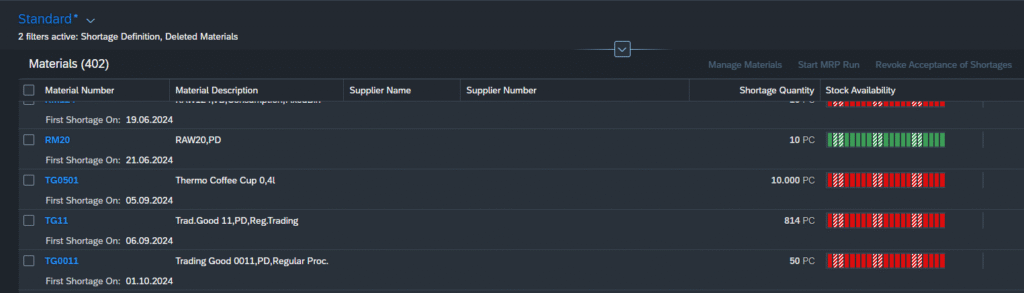
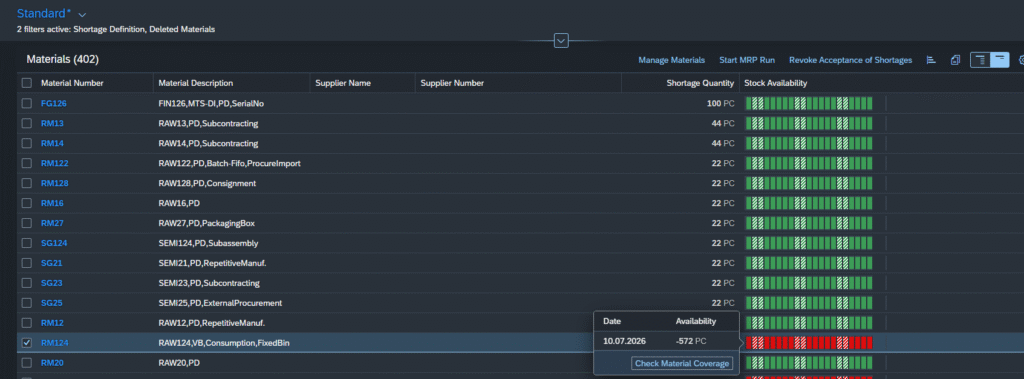
Monitor Material Coverage (PP/MM)
With Release 2508, SAP has fully transitioned to the new Monitor Material Coverage (F2101A) app, replacing the previous F2101 application.
The new app is part of the MRP Cockpit and enables production planners to identify critical material shortages at an early stage, prioritise issues and initiate corrective actions directly from within the application. The previous app has been removed as part of the release. At a glance, users can see:
- which materials are becoming critical,
- which production orders are at risk,
- which actions should be prioritised.
In addition, numerous filtering and selection options are available, including current stock levels, MRP controller, safety stock and other planning related key figures. This allows bottlenecks to be analysed more quickly and appropriate measures to be initiated without delay.
Manage Production Orders
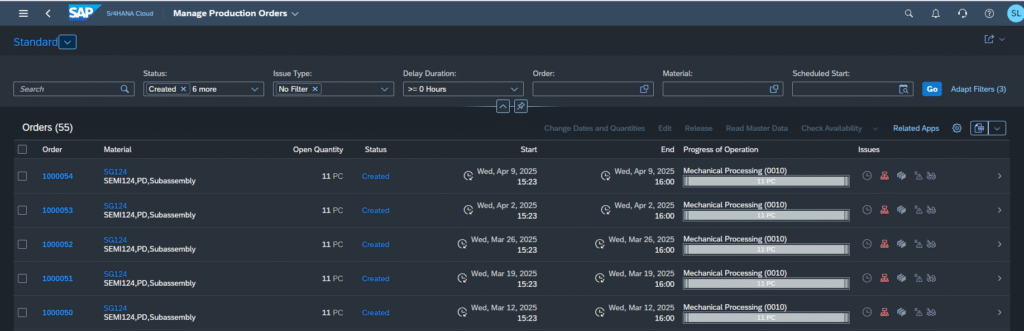
The Manage Production Orders (F2336) app has been enhanced with several notable improvements in Releases 2508 and 2602.
While Release 2508 focused primarily on usability enhancements, Release 2602 introduces two major highlights: Order Combination and the integration of the Production Planning and Operations Agent.
With the Order Combination feature, production planners can merge multiple production orders with identical or similar operations into a single combined order. The objective is to:
- reduce machine setup times
- improve machine utilisation
- simplify production planning
- use production resources more efficiently
The functionality supports both Make to Stock and Make to Order scenarios and is accessed directly within the Manage Production Orders app.
Another key innovation is the Production Planning and Operations Agent. Using a new Release button, production orders can now be released with the support of agentic AI.
The AI agent automatically performs a range of checks, including:
- material availability
- alternative components
- work centre capacity
- rescheduling recommendations if release requirements are not fulfilled
AI supported production order release was introduced with Release 2602. However, the functionality is not available by default. Organisations must activate the Production Planning and Operations Agent, integrate Joule, and ensure that the required authorisations and licences are in place.
Innovations for Procurement (MM): Greater automation throughout the procurement process
Transparency and speed remain the key priorities in procurement. SAP continues to enhance functionality for:
- smarter purchasing processes
- improved collaboration with suppliers
- greater automation of approval workflows
- tighter integration with SAP Business Network and SAP Ariba
As a result, recurring operational tasks can be significantly reduced.
Manage Purchase Orders
With the latest releases of SAP S/4HANA Cloud Public Edition, SAP has enhanced the Manage Purchase Orders (Version 2) app with intelligent new capabilities. In addition to improvements to the user experience, purchasers particularly benefit from AI supported delivery reliability predictions. Critical purchase orders can be identified at an early stage, enabling corrective action to be taken before material shortages occur. This improves security of supply while reducing the manual effort required to monitor outstanding purchase orders.
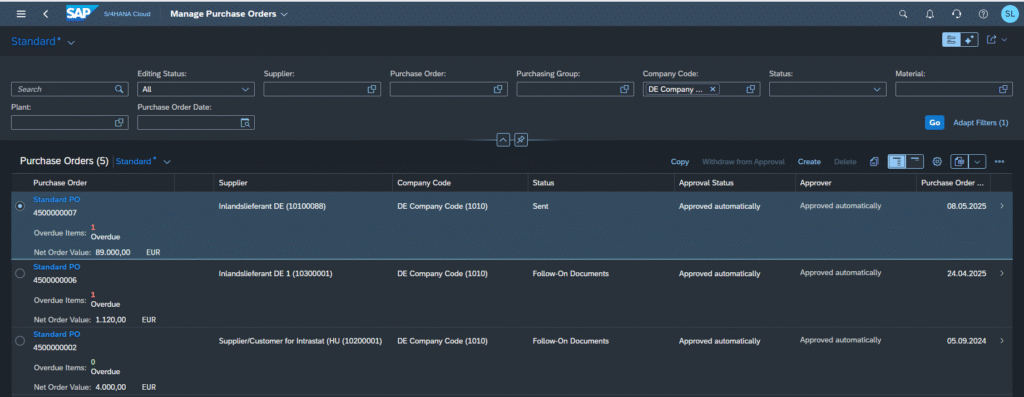
AI functionality: Summarise Purchase Orders
The app also now supports generative AI capabilities from SAP Business AI. Using the Summarise function, purchasers can analyse purchase orders using natural language. Instead of opening numerous documents individually, Joule provides a concise summary of relevant information, such as outstanding, overdue or supplier related purchase orders. This saves time, simplifies prioritisation and supports well informed decisions in day to day procurement activities.
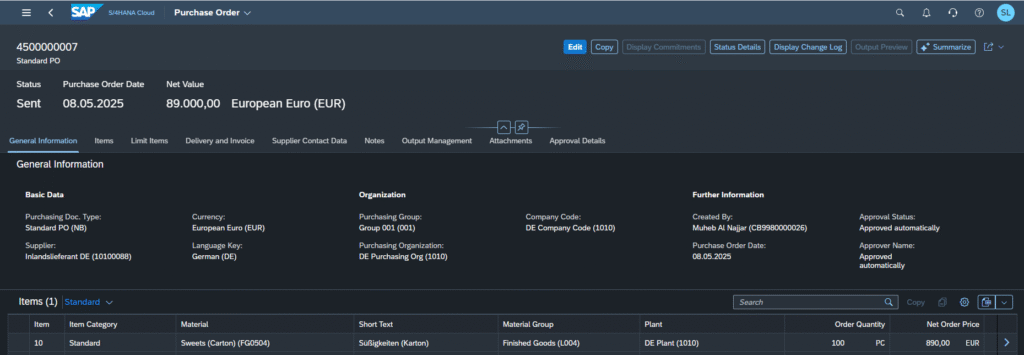
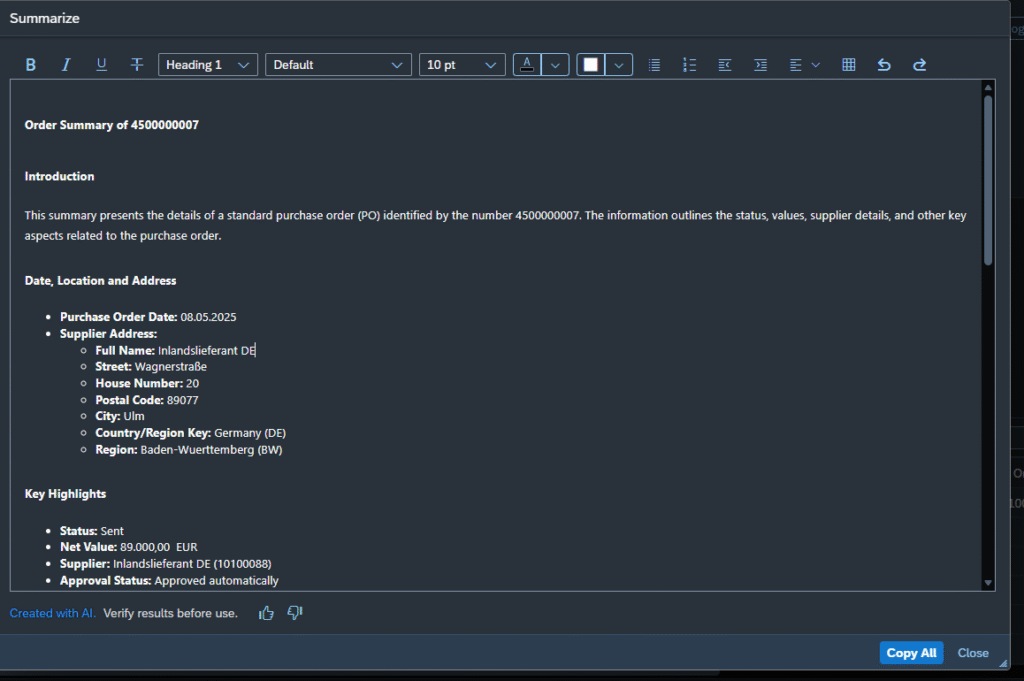
To use this functionality, organisations must have an active Joule integration together with the required authorisations.
Innovations for Sales (SD): Faster and more transparent customer processes
Efficiency and customer experience also remain key priorities in Sales.
The most important enhancements include:
- optimised sales order processing
- greater transparency of delivery status
- simplified collaboration with business partners
- stronger integration of digital sales processes
Organisations with international operations particularly benefit from a higher level of process standardisation.
Manage Sales Orders: Improved order processing with greater transparency
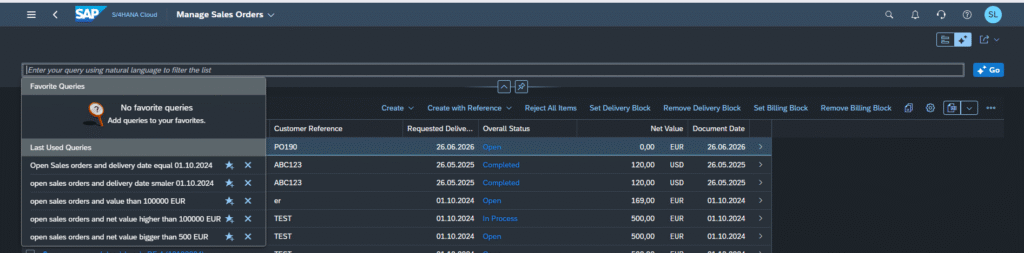
With Release 2602, SAP has extended the app with additional fields and analytical capabilities. These include:
- enhanced filtering and search options
- additional status information
- extended support for customer specific fields
- improved processing and overview of sales documents
The following app, for example, demonstrates the Smart Filter functionality, which enables users to enter search requests using natural language:
Track Sales Orders: Identify critical situations more quickly
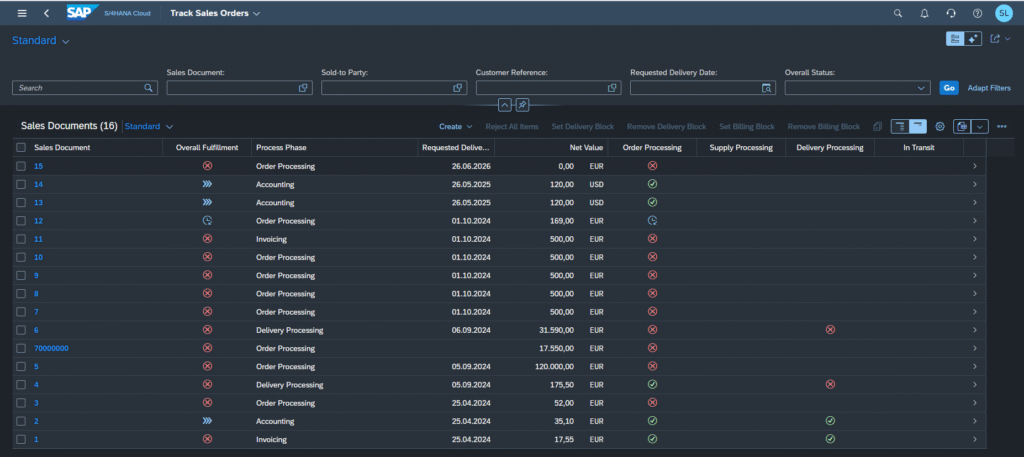
The Track Sales Orders app enables sales teams to monitor the status of customer orders at any time. Although the app is not new, it continues to deliver significant business value and is therefore well worth highlighting.
The application consolidates all relevant information, from sales order status through to delivery and billing status, within a single central overview. Critical orders can be identified at an early stage and transferred directly to detailed analysis.
Benefits for Sales
- Central overview of all customer orders
- Faster responses to customer enquiries
- Greater transparency across the Order to Cash process
- Direct navigation to detailed information and follow-up actions
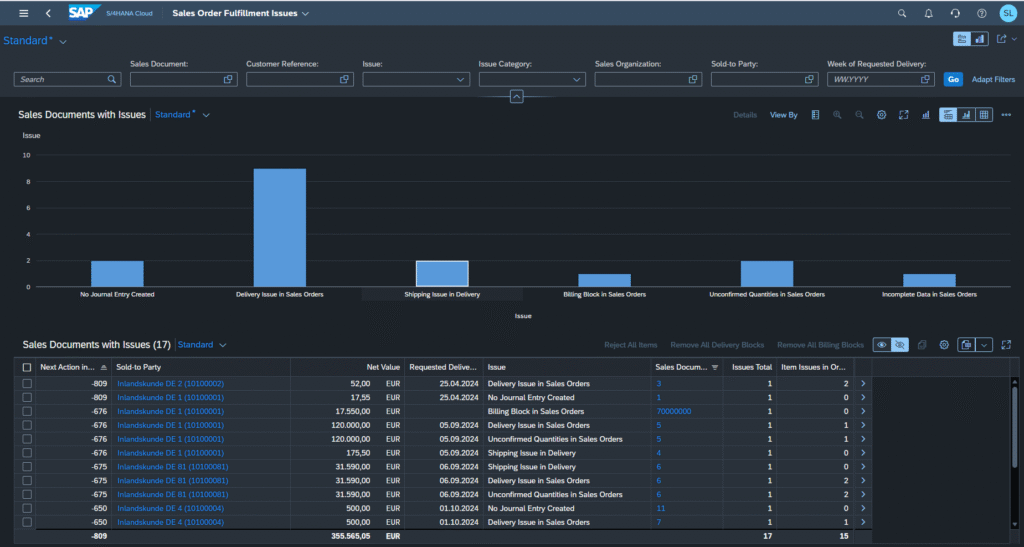
Sales Order Fulfillment Issues (SD)
The Sales Order Fulfilment Issues app provides sales teams with a central overview of all customer orders where delivery is at risk. Critical issues, such as delivery blocks, missing documents or compliance related restrictions, are automatically highlighted and can be analysed in detail. Direct navigation to the detailed view enables users to identify root causes more quickly and initiate appropriate corrective actions.
Benefits for Sales
- Greater transparency of critical customer orders
- Faster resolution of delivery issues
- Improved on time delivery performance
- Reduced manual effort for analysis
Innovations for Finance: From reporting to an active management tool
SAP is increasingly focusing on intelligent automation in Finance.
Recent innovations include:
- AI support for handling exceptions
- more intelligent processing in Accounts Receivable Management
- enhanced payment processes
- greater transparency of open items
As a result, routine tasks are reduced, allowing finance professionals to focus more on analysis and business steering.
For CFOs, this means:
- faster month end closing
- fewer errors
- greater transparency of liquidity
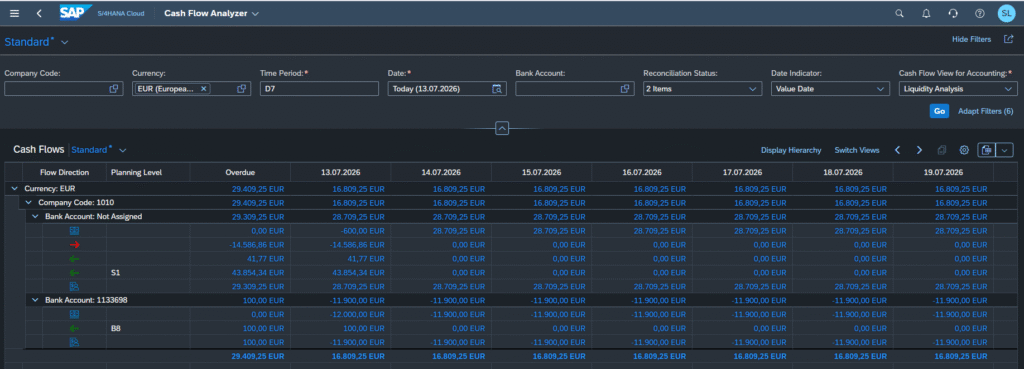
Cash Flow Analyzer (FI)
With Release 2602, SAP has enhanced the Cash Flow Analyzer with new analysis and filtering capabilities. Finance and Treasury teams can now distinguish more precisely between Cash Position and Liquidity Analysis, while excluding already reconciled cash flows from their analyses. This provides a more accurate view of both current and future liquidity.
By integrating the new Cash Flow Reconciliation model, organisations gain a more reliable basis for cash management decisions while simultaneously reducing the manual effort required for reconciliation activities.
Particularly in times of economic uncertainty, these enhancements provide valuable support for informed financial decision making.
Innovations in Controlling (CO): Better decisions based on real time data
Modern business steering relies on real time information. The latest innovations support organisations with:
- more detailed profitability analysis
- enhanced cost analysis
- greater transparency of profit contributions
- faster reporting without data replication
Especially during periods of economic uncertainty, having an up to date view of margins and costs becomes a decisive competitive advantage.
Product Profitability Review Booklet
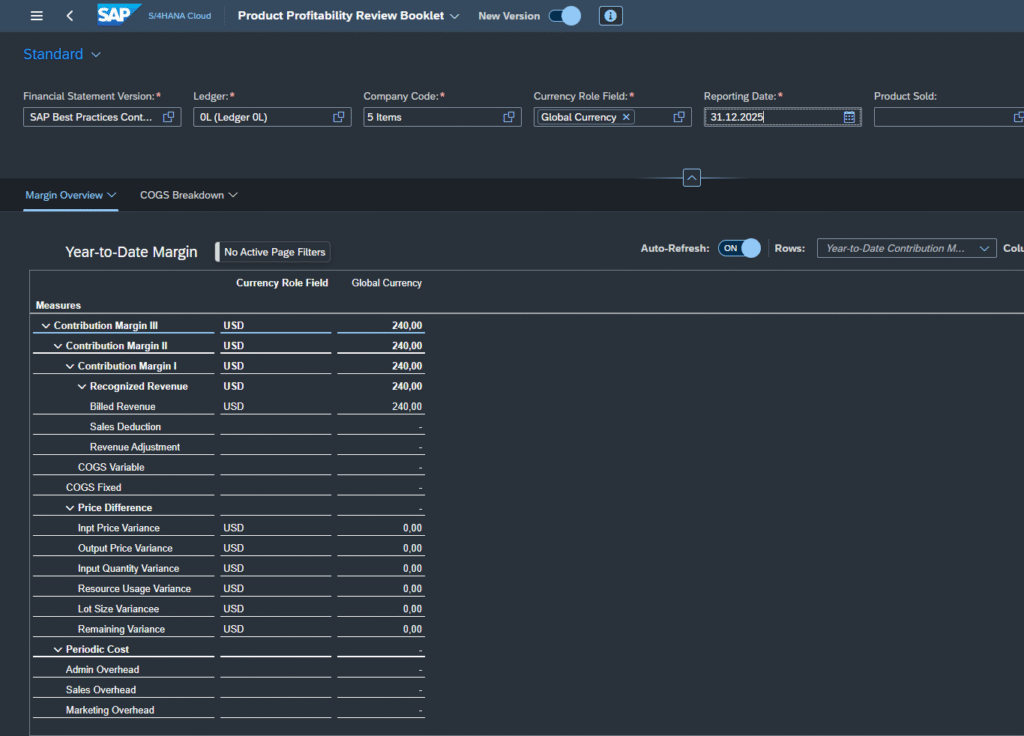
The Product Profitability Review Booklet (App F8348) is one of the strongest examples of innovation in Controlling (CO PA / Margin Analysis). SAP has significantly enhanced the app with Release 2602. In addition to new period comparison capabilities, the application now supports controllers with AI Assisted Business Insights.
The AI automatically analyses contribution margins, identifies the key margin drivers and summarises the most significant changes in natural language. For example, users can identify the products with the highest margin gains or losses within seconds. The app is further enhanced by commenting capabilities, additional analysis dimensions and reporting in the Functional Currency. These features provide organisations with a stronger foundation for pricing decisions, product portfolio management and profitability steering.
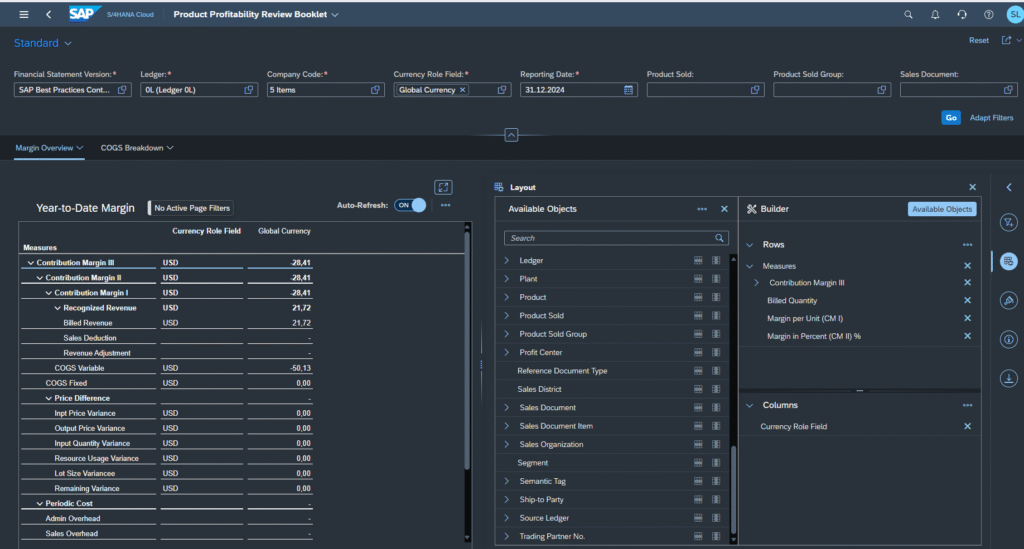
The app can also be tailored to an organisation’s specific requirements by incorporating the relevant characteristics and key figures into the report.
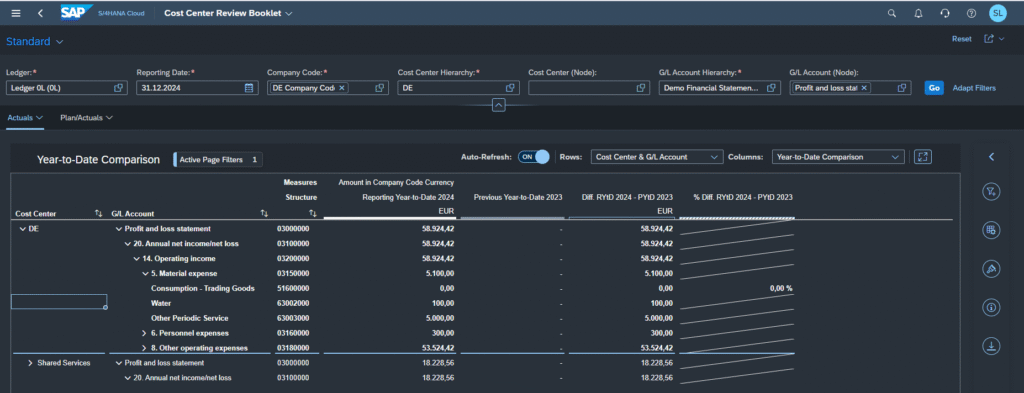
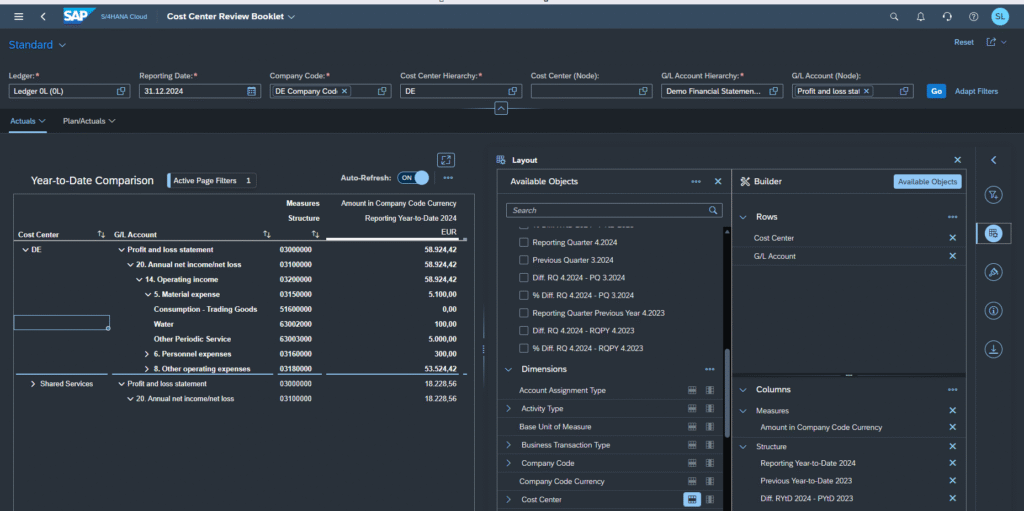
Cost Center Review Booklet
The Cost Center Review Booklet (F7763) is another highly recommended application that clearly differentiates itself from traditional cost centre reports. It provides controllers with a central overview of actual, planned and variance data for their cost centres.
One of its standout features is AI Assisted Analytical Business Insights. The AI automatically analyses the displayed data, summarises the most important findings in natural language and identifies the cost centres with the largest variances together with their key cost drivers. This enables users to detect anomalies more quickly and make better informed decisions for cost management. To use the AI functionality, the required authorisations and a SAP Business AI entitlement are necessary.
While the Cost Center Review Booklet focuses on costs and variance analysis for internal cost management, the Product Profitability Review Booklet provides a comprehensive view of margins and profitability, placing business performance firmly at the centre of analysis.
Conclusion
The latest releases of SAP S/4HANA Cloud Public Edition clearly demonstrate the direction in which the solution is evolving. The applications presented in this article show that the benefits extend far beyond traditional process optimisation. AI supported capabilities enable users to identify bottlenecks at an early stage, analyse data more quickly and complete routine tasks more efficiently. At the same time, the biannual release cycle ensures that innovations are continuously introduced into day to day business operations without the need for complex upgrade projects.
For organisations, this means that regularly evaluating and adopting the latest functionality enables them to unlock the full potential of SAP S/4HANA Cloud Public Edition. They can improve process efficiency, reduce the workload on employees and drive digital transformation in a sustainable way. For this reason, it is well worth reviewing the innovations delivered with each release and making targeted use of them within your own business processes.
Book your personal meeting
Our Customer Success Manager, Tanja Nikolaus, supports our customers in their projects in the S/4HANA Public Cloud environment and is happy to take care of your concerns.

You are currently viewing a placeholder content from Active Campaign. To access the actual content, click the button below. Please note that doing so will share data with third-party providers.
More Information