

Inhalt
Die Europäische Union verändert grundlegend, wie die Mehrwertsteuer verwaltet wird. Das Maßnahmenpaket „Mehrwertsteuer im digitalen Zeitalter“ (VAT in the Digital Age, ViDA) zählt zu den wichtigsten Mehrwertsteuerreformen des kommenden Jahrzehnts. Ziel ist es, das europäische Mehrwertsteuersystem digitaler und transparenter zu gestalten und es besser vor Betrug zu schützen.
ViDA wurde am 11. März 2025 von der EU verabschiedet und wird bis Januar 2035 schrittweise umgesetzt.
Was ist ViDA?
ViDA steht für VAT in the Digital Age – Mehrwertsteuer im digitalen Zeitalter.
Für Unternehmen ist ViDA weit mehr als eine Steuerreform. ViDA verändert grundlegend, wie Rechnungen ausgestellt, Mehrwertsteuerdaten gemeldet, grenzüberschreitende Transaktionen überwacht und Mehrwertsteuerpflichten in den EU-Mitgliedstaaten verwaltet werden.
Die Initiative wurde von der Europäischen Kommission entwickelt, um das Mehrwertsteuersystem der EU zu modernisieren. Sie basiert auf drei zentralen Säulen:
- Digitale Meldepflichten (Digital Reporting Requirements, DRR)
- Mehrwertsteuervorschriften für die Plattformwirtschaft
- Einmalige Mehrwertsteuerregistrierung (Single VAT Registration, SVR)
Digitale Meldepflichten
Die erste und wohl weitreichendste Säule ist der Übergang zu einer nahezu in Echtzeit erfolgenden digitalen Mehrwertsteuerberichterstattung auf Basis von E-Rechnungen. Unternehmen, die an grenzüberschreitenden B2B-Transaktionen beteiligt sind, melden ihre innergemeinschaftlichen Umsätze heute in der Regel über periodische Mehrwertsteuermeldungen. Dadurch erhalten die Steuerbehörden die entsprechenden Informationen häufig erst nach Abschluss einer Transaktion und oftmals in einem Format, das eine schnelle Analyse erschwert.
ViDA verändert dieses Modell.
Ab dem 1. Juli 2030 gelten für grenzüberschreitende B2B-Transaktionen neue digitale Meldepflichten. Das System basiert auf der elektronischen Rechnungsstellung und der digitalen Übermittlung von Transaktionsdaten an die Steuerbehörden. Ziel ist es, den Behörden wesentlich schneller detaillierte Informationen bereitzustellen. So können sie verdächtige Transaktionen frühzeitig erkennen und Mehrwertsteuerkarussellbetrug wirksamer bekämpfen.
Für Unternehmen bedeutet dies, dass E-Rechnungen zunehmend zu einem zentralen Bestandteil ihrer Steuer-Compliance-Infrastruktur werden und nicht mehr nur eine Option für die Buchhaltung oder Rechnungsstellung darstellen. Nach Schätzungen der Europäischen Kommission könnte die Umstellung auf E-Rechnungen den Mehrwertsteuerbetrug um bis zu 11 Milliarden Euro pro Jahr reduzieren. Gleichzeitig könnten die Verwaltungs- und Compliance-Kosten für Unternehmen in der EU über einen Zeitraum von zehn Jahren um jährlich mehr als 4,1 Milliarden Euro sinken.
Warum ist das wichtig?
Unternehmen benötigen künftig Systeme, die in der Lage sind:
- Konforme elektronische Rechnungen zu erstellen.
- Rechnungen in den vorgeschriebenen Formaten auszutauschen.
- Die korrekten Mehrwertsteuerdaten zu erfassen.
- Relevante Transaktionsinformationen zu übermitteln.
- Korrekte und aktuelle Mehrwertsteuer-Stammdaten zu pflegen.
- ERP-, Buchhaltungs- und Rechnungssysteme in die Steuer-Compliance-Prozesse zu integrieren.
Die Auswirkungen sind erheblich: Die Mehrwertsteuer-Compliance entwickelt sich von einer periodischen Meldepflicht hin zu einem kontinuierlichen digitalen Datenmanagement.
Dabei ist zu beachten, dass viele Mitgliedstaaten bereits erste Schritte in Richtung E-Rechnung und digitaler Übermittlung von Transaktionsdaten unternommen haben. PIKON hat zu diesen Themen bereits verschiedene Blogbeiträge veröffentlicht.
Die Plattformwirtschaft
Die zweite Säule befasst sich mit dem rasanten Wachstum digitaler Plattformen, beispielsweise Online-Marktplätzen für Kurzzeitvermietungen und Personenbeförderungsleistungen.
Im Rahmen von ViDA werden Plattformen, die bestimmte Leistungen in den Bereichen kurzfristige Vermietung von Unterkünften und Personenbeförderung auf der Straße vermitteln, unter bestimmten Voraussetzungen für die Erhebung und Abführung der Mehrwertsteuer verantwortlich. Dies gilt, wenn der eigentliche Leistungserbringer selbst keine Mehrwertsteuer berechnet.
Dieser Ansatz wird allgemein als Modell des fiktiven Leistungserbringers („Deemed Supplier Model“) bezeichnet. Er soll die Einhaltung der Vorschriften für Privatpersonen und kleine Unternehmen vereinfachen, die derzeit die geltenden Mehrwertsteuerregelungen verstehen und anwenden müssen, obwohl sie ihre Leistungen über eine Plattform anbieten. Für Plattformbetreiber bedeutet dies, dass die Mehrwertsteuer nicht länger ausschließlich als Angelegenheit des jeweiligen Leistungserbringers betrachtet werden kann. Mehrwertsteuerliche Pflichten werden zunehmend zu einem festen Bestandteil des Geschäftsmodells digitaler Plattformen.
Die Maßnahmen für die Plattformwirtschaft sollen ab dem 1. Juli 2028 gelten. Die Mitgliedstaaten können ihre Umsetzung jedoch bis zum 1. Januar 2030 verschieben.
Einzige Mehrwertsteuerregistrierung
Die dritte und letzte Säule ist die einzige Mehrwertsteuerregistrierung (Single VAT Registration, SVR).
Das Prinzip ist einfach: Unternehmen sollen einen größeren Teil ihrer Mehrwertsteuerpflichten innerhalb der EU über ein einziges Online-System verwalten können, anstatt sich in mehreren Mitgliedstaaten separat registrieren zu müssen. Die Reform baut auf dem bestehenden One-Stop-Shop-Verfahren (OSS) für den E-Commerce auf. ViDA erweitert und verbessert den OSS-Rahmen und umfasst unter anderem neue Verfahren und Änderungen im Zusammenhang mit der Verbringung eigener Gegenstände (Transfer of Own Goods, TOOG), dem Import-One-Stop-Shop (IOSS) und weiteren grenzüberschreitenden Mehrwertsteuerpflichten.
Ziel ist es, die Zahl der Situationen zu reduzieren, in denen Unternehmen eine lokale Mehrwertsteuerregistrierung benötigen – beispielsweise weil sie Warenbestände in einem anderen Mitgliedstaat lagern, bestimmte B2C-Umsätze tätigen oder dort anderweitig Mehrwertsteuerpflichten auslösen. Dadurch wird die Mehrwertsteuerverwaltung weniger fragmentiert und der administrative Aufwand für Unternehmen verringert.
ViDA: Die wichtigsten Meilensteine
Wie bereits erwähnt, sollte ViDA nicht als Reform mit einem einzigen Umsetzungsdatum, sondern als schrittweise Transformation betrachtet werden. Doch was ist wann zu erwarten?
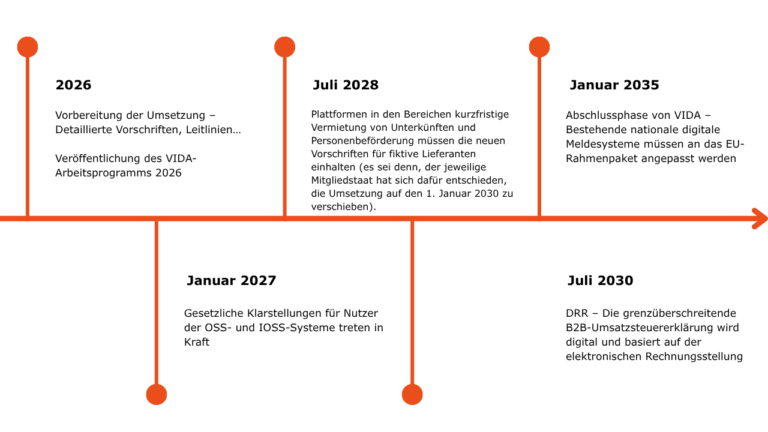
Für Unternehmen ist der 1. Januar 2027 der erste wichtige operative Meilenstein im Rahmen von ViDA.
Ab diesem Zeitpunkt treten mehrere Änderungen an den OSS- und IOSS-Verfahren sowie den damit verbundenen Mehrwertsteuervorschriften in Kraft. Die Europäische Kommission beschreibt diese als Änderungen und Klarstellungen für Nutzer des One-Stop-Shop- und Import-One-Stop-Shop-Verfahrens. Das Umsetzungsprogramm für 2026 sieht zudem eine Erweiterung des OSS auf bestimmte B2C-Leistungen im Bereich des Ladens von Elektrofahrzeugen vor.
Unternehmen, die OSS oder IOSS nutzen, sollten sich daher bereits jetzt mit ViDA befassen und nicht bis 2028 oder 2030 warten.
Wie sollte die ViDA-Strategie aussehen?
Technische Vorbereitung auf die digitale Mehrwertsteuer-Compliance für 2026
Im Jahr 2026 sollte die Priorität darin liegen, die Auswirkungen von ViDA im Rahmen einer strukturierten Analyse zu bewerten.
Diese Analyse sollte fünf zentrale Fragen beantworten:
- Welche Bestandteile von ViDA sind für unser Unternehmen relevant?
- Sind wir von den OSS-/IOSS-Änderungen zum 1. Januar 2027 betroffen?
- Sind unsere ERP-, Rechnungs- und Mehrwertsteuersysteme in der Lage, die zukünftigen Anforderungen an die elektronische Rechnungsstellung zu erfüllen?
- Sind wir über Plattformen tätig oder bieten wir Dienstleistungen an, die von den Vorschriften für die Plattformwirtschaft ab 2028 betroffen sein könnten?
- Welche Änderungen sind erforderlich, bevor die digitalen Meldepflichten im Jahr 2030 verbindlich werden?
Mit anderen Worten: Das Jahr 2027 sollte als erster Meilenstein der Umsetzung betrachtet werden – und nicht als der Zeitpunkt, an dem Unternehmen erst mit ihren Vorbereitungen beginnen.
Beginn der Umsetzung im Jahr 2027
Im Jahr 2027 sollten Unternehmen von der Analyse zur Umsetzung übergehen. Das bedeutet, die Ergebnisse der ViDA-Auswirkungsanalyse in eine konkrete Roadmap zu überführen.
Für Unternehmen mit umfangreichen grenzüberschreitenden Aktivitäten kann dies bedeuten, folgende Maßnahmen einzuleiten oder zu beschleunigen:
- E-Rechnungsprojekte
- ERP-Upgrades
- Automatisierung der Mehrwertsteuerprozesse
- Standardisierung von Transaktionsdaten
- Funktionen für die Echtzeitberichterstattung
- Governance für steuerrelevante Daten
- Automatisierte Mehrwertsteuerfindung
Die Umsetzungsstrategie der EU sieht vor, dass etwa zu diesem Zeitpunkt die zentrale IT-Entwicklung für das Mehrwertsteuer-Informationsaustauschsystem VIES beginnt. Gleichzeitig werden die Arbeiten an sicheren IOSS-Lösungen und an der weiteren technischen Umsetzung fortgesetzt.
Die nächsten großen Veränderungen für Unternehmen im Jahr 2028
Nach den ersten Änderungen im Jahr 2027 folgt am 1. Juli 2028 der nächste wichtige Meilenstein.
Zu diesem Zeitpunkt treten die wesentlichen Reformen zur einzigen Mehrwertsteuerregistrierung sowie die neuen Regelungen für fiktive Leistungserbringer bei bestimmten digitalen Plattformen in Kraft. Für Unternehmen könnte dies die grenzüberschreitende Verwaltung der Mehrwertsteuer erheblich verändern.
Die sichtbarsten Veränderungen werden voraussichtlich die Plattformwirtschaft betreffen. Aber auch andere Unternehmen profitieren von der umfassenderen Nutzung des OSS-Verfahrens und der Verringerung der erforderlichen Mehrwertsteuerregistrierungen.
Die digitale Mehrwertsteuerrevolution beginnt im Jahr 2030
Die größte Veränderung erfolgt am 1. Juli 2030.
Zu diesem Zeitpunkt treten die neuen digitalen Meldepflichten für grenzüberschreitende B2B-Transaktionen in Kraft. Das traditionelle Modell, bei dem zusammengefasste Informationen zu grenzüberschreitenden Umsätzen periodisch gemeldet werden, wird durch ein stärker digitalisiertes und transaktionsbasiertes Verfahren ersetzt. Unternehmen werden für relevante grenzüberschreitende B2B-Transaktionen E-Rechnungen ausstellen und die entsprechenden Informationen digital an die Steuerbehörden übermitteln.
Dies verändert das Verhältnis zwischen Unternehmen und Steuerbehörden grundlegend. Anstatt Transaktionen erst nachträglich in regelmäßigen Abständen zu melden, werden digitale Transaktionsdaten den Behörden künftig deutlich zeitnäher zur Verfügung gestellt.
Fazit: Unternehmen sollten 2026 aktiv werden
ViDA wird häufig lediglich als eine weitere europäische Mehrwertsteuerreform dargestellt. Im Kern ist ViDA jedoch ein umfassendes Datentransformationsprojekt.
Die Steuerbehörden werden zunehmend auf strukturierte Transaktionsdaten angewiesen sein. Gleichzeitig müssen Unternehmen sicherstellen, dass ihre Geschäftsvorgänge korrekte, vollständige und maschinenlesbare Steuerinformationen erzeugen. Dadurch werden die Bereiche Finanzen, Steuern, IT und operative Geschäftsprozesse enger miteinander verknüpft.
Eine Rechnung wird künftig nicht mehr nur ein Dokument sein, das an einen Kunden gesendet wird. Sie wird zu einem Datenobjekt innerhalb eines digitalen Steuerökosystems. Dieser Wandel hat weitreichende Auswirkungen auf ERP-Systeme, Einkauf, Vertrieb, Finanzwesen, Stammdatenmanagement, Tax Engines, E-Rechnungsanbieter und Compliance-Prozesse.
Die entscheidende Frage ist daher nicht, ob ViDA kommt, sondern ob Ihr Unternehmen darauf vorbereitet sein wird.
Quelle: Europäische Kommission, Generaldirektion Steuern und Zollunion, „VAT in the Digital Age: Implementation Strategy“, 24. September 2025.

E-Invoicing Strategie Workshop
Entwickeln Sie eine klare, zukunftssichere Roadmap, die auf Ihre länderspezifischen E-Rechnungsanforderungen und Ihre SAP-Systemlandschaft abgestimmt ist.
Mehr erfahren
Webmeeting zu ViDA in Europa
Haben Sie Fragen oder möchten Sie erfahren, wie PIKON Sie bei der Entwicklung Ihres Business Case unterstützen kann? Dann hinterlassen Sie gerne einen Kommentar oder vereinbaren Sie ein Webmeeting. Ich unterstütze Sie gerne!

Sie sehen gerade einen Platzhalterinhalt von Active Campaign. Um auf den eigentlichen Inhalt zuzugreifen, klicken Sie auf die Schaltfläche unten. Bitte beachten Sie, dass dabei Daten an Drittanbieter weitergegeben werden.
Mehr Informationen